



Understanding tenancy eviction notice is crucial for both landlords and tenants.
It is a legal document issued by the landlord to inform the tenant about the termination of the tenancy agreement and the requirement to vacate the rental property within a specified period.
It serves as a formal warning and follows a specific process outlined by the rental laws and regulations.
Dubai’s vibrant rental market is a melting pot of diverse cultures and bustling opportunities.
Whether you’re a tenant or a landlord, it’s crucial to have a clear understanding of tenancy eviction notices and Dubai’s rental laws.
In this comprehensive guide, we dive deep into the intricacies of the eviction process and shed light on the legal framework that governs the rental landscape.
Discover More About: How Many Visa I Can Get in Free Zone
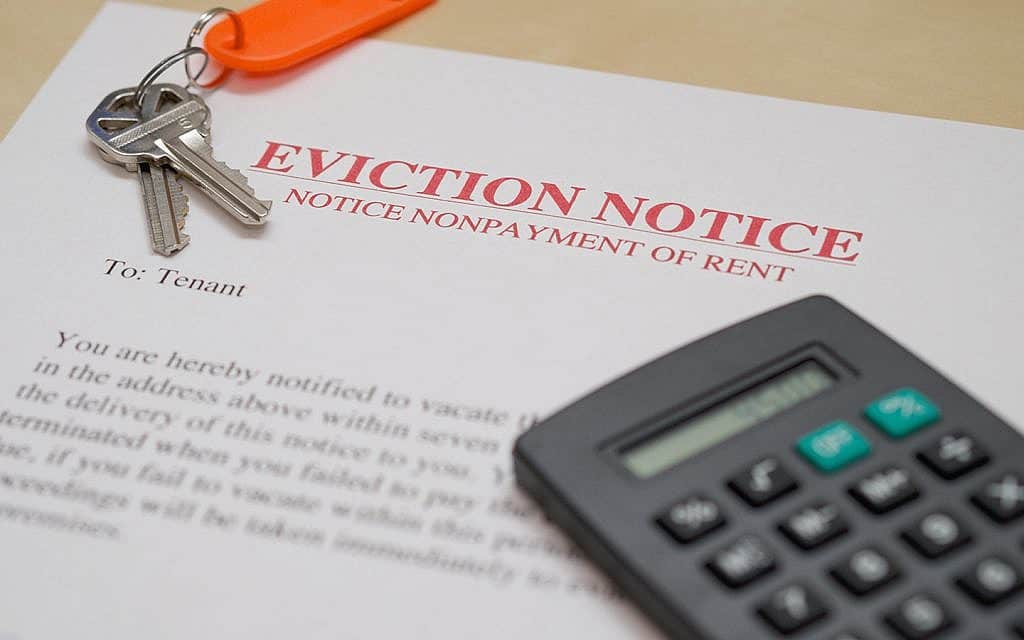
What does eviction notice mean in uae?
Eviction is a legal process that occurs when a landlord decides to terminate a tenancy agreement and requires the tenant to vacate the rental property.
In Dubai, the Real Estate Regulatory Agency (RERA) plays a crucial role in regulating the eviction process and ensuring fair treatment of both landlords and tenants
An eviction notice in UAE refers to a legal document issued by a landlord to a tenant, informing them that they must vacate the rented property within a specified period of time.
It is typically served when the tenant has violated the terms of the tenancy agreement, such as non-payment of rent, breach of contract, or engaging in illegal activities on the premises.
The eviction notice serves as a formal warning and legal requirement before the landlord can take further legal action to reclaim the property.
Read Tenant Rights in Dubai: How to Resolve Disputes with Landlords
New Rental Law in Dubai
Dubai has recently introduced a new rental law aimed at enhancing the rental market’s stability and protecting the rights of both landlords and tenants.
The RERA tenancy contract rules introduce stricter regulations regarding rent increases, security deposits, and dispute resolution mechanisms.
It is important for both landlords and tenants to familiarize themselves with these new regulations to ensure compliance and a fair rental process.
For more details read Key Features of the New Rental Law in Dubai
Tenancy Eviction Notice Process in UAE
The tenancy eviction notice process in the UAE follows specific procedures to ensure fairness and protection of the rights of both landlords and tenants. Here is an overview of the process:
1. Identify valid reasons:
Landlords can initiate an eviction process if tenants violate the terms of the tenancy agreement, fail to pay rent, engage in illegal activities, or cause significant damage to the property.
2. Serve written notice:
The landlord must issue a written eviction notice to tenant dubai, clearly stating the reason for eviction, the required remedy or action, and a reasonable notice period for the tenant to respond or vacate the premises.
3. Mediation or negotiation:
In some cases, landlords and tenants may engage in mediation or negotiation to resolve the issues and avoid eviction. This step can involve discussions, agreements on outstanding payments, or necessary repairs.
4. Filing a case:
If the tenant fails to respond or comply with the eviction notice, the landlord can file a case with the relevant local rental dispute settlement committee or the Rent Dispute Settlement Centre.
5. Legal proceedings:
The case will proceed to a hearing where both parties present their evidence and arguments. The committee will review the case and issue a judgment based on the UAE’s rental laws and regulations.
6. Execution of eviction order:
If the committee rules in favor of the landlord, an eviction order will be issued.
The tenant will be legally required to vacate the property within the specified timeframe mentioned in the order.
Read more about How to file complaint against landlord in Dubai?
What is the Tenant Notice to Vacate in UAE?
In the UAE, the tenant notice to vacate is a written notice provided by a tenant to their landlord to inform them about their intention to move out of the rental property.
It serves as formal notification of the tenant’s decision to terminate the tenancy and specifies the intended date of vacating the premises., the tenant’s notice to vacate in the UAE should include important details such as the tenant’s name, the address of the rental property, the proposed move-out date, and the tenant’s signature.
It is advisable to refer to the terms of the tenancy agreement and consult local rental laws to determine the required notice period and any specific guidelines for serving the notice to vacate in the UAE.
Read More About: Recognizing the UAE’s Debt Collection Procedure

How much notice does a landlord have to give a tenant to move out in Dubai
In Dubai, the notice period that a landlord must give to a tenant to move out depends on the type of tenancy contract and the reason for eviction. Here are some general guidelines:
- Fixed-term tenancy: If the tenancy contract has a specific end date and the landlord wishes to terminate it, they usually do not need to provide a notice period. The tenant is expected to vacate the premises by the contract’s expiration date.
- Renewable tenancy: If the tenancy contract is renewable and the landlord wants to end it, they must provide the tenant with a notice period of at least 90 days before the contract’s expiration. This allows the tenant sufficient time to make alternative housing arrangements.
- Eviction for cause: In cases where the tenant has violated the terms of the tenancy agreement or committed serious breaches, the landlord may seek eviction. In such instances, the landlord must provide a written notice to the tenant, specifying the reason for eviction and giving them a reasonable opportunity to rectify the issue. The notice period can vary depending on the nature of the violation and the terms of the agreement.
It’s important for both landlords and tenants in Dubai to refer to the relevant laws and regulations, such as those issued by the Dubai Land Department (DLD), to ensure compliance with the specific notice requirements for their particular situation.
Seeking legal advice from rental dispute lawyers in Dubai is also recommended to ensure proper adherence to the applicable regulations.
May you like to read Claiming Tenant Compensation if The Landlord Rents out the Property After Sending an Eviction Notice For Personal Use?
Notice period to vacate rental property in Dubai
The notice period to vacate a rental property in Dubai depends on the type of tenancy agreement and the reason for termination. For fixed-term tenancy contracts, the tenant is expected to vacate the premises by the contract’s expiration date.
In renewable tenancy contracts, the landlord must provide a notice period of at least 90 days before the contract’s expiration, in cases of eviction for cause, the notice period can vary based on the nature of the violation and the terms of the agreement.
It is essential for both landlords and tenants to refer to the specific notice requirements outlined in their tenancy agreement and local rental laws.
FAQ
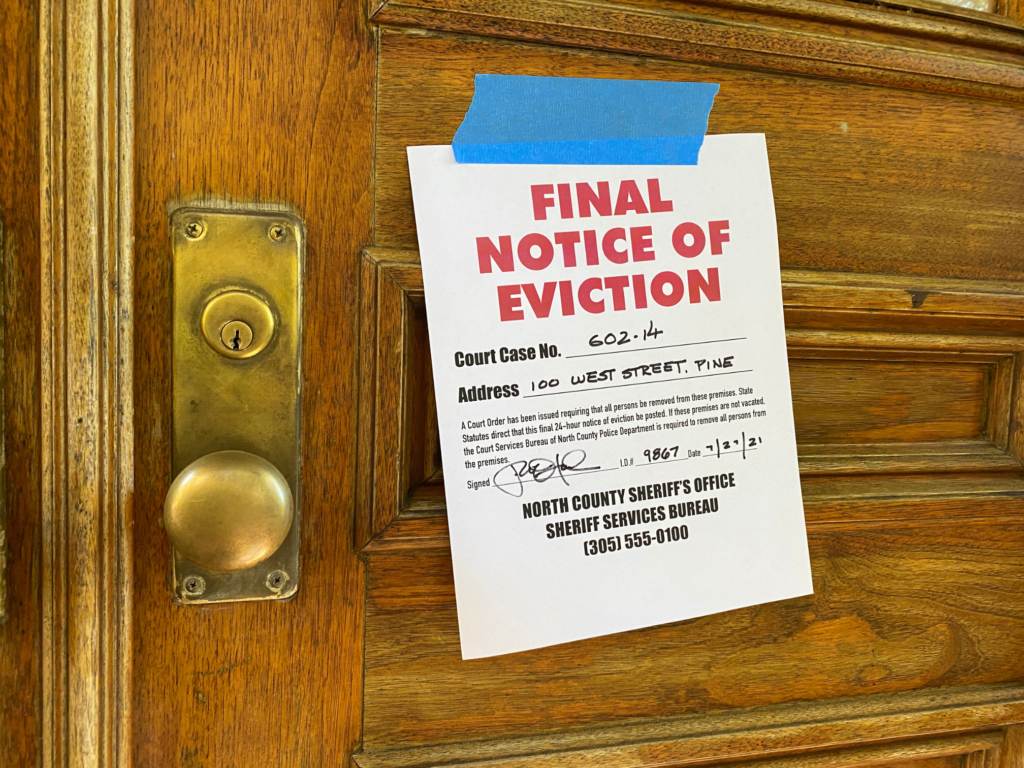
eviction notice to tenant dubai
1- Can I legally contest landlord’s eviction notice?
Tenants in the UAE have the right to legally contest a landlord’s eviction notice.
They can do so by seeking legal advice, understanding their rights and obligations under the tenancy laws, and presenting their case before the relevant rental dispute settlement committee or Rent Dispute Settlement Centre.
2- Can landlords evict tenants without serving them 12 months’ notice?
In the UAE, landlords generally need to provide tenants with a notice period of 12 months to terminate a tenancy contract.
However, there may be exceptional circumstances where a landlord can seek early termination with a shorter notice period, such as if the tenant has breached the terms of the agreement or the property is required for personal use.
3- Can a tenant vacate without notice?
In the UAE, tenants are generally required to provide notice to their landlords before vacating a rental property.
The notice period is typically specified in the tenancy agreement or governed by local rental laws. Vacating without proper notice may result in potential legal and financial consequences for the tenant.
4- Does an eviction notice have to be personally given to a tenant?’
In the UAE, it is generally recommended for landlords to personally serve the eviction notice to tenant dubai or to send it through a registered mail service with proof of delivery.
This helps ensure that the tenant receives the notice and is aware of the eviction proceedings.
However, there may be alternative methods of serving the notice allowed by local rental laws, such as via email or through a representative.
5- How do I evict a tenant in Dubai?
To evict a tenant in Dubai, follow these steps:
- Serve a written eviction notice, specifying the reason and remedy required.
- Attempt mediation or negotiation.
- File a case with the Rental Dispute Settlement Center (RDSC).
- Attend the hearing and present evidence.
- Await the RDSC’s judgment and, if in your favor, execute the eviction order.
See More About: UAE Cheque Bounce Law & Fighting Lawsuits Regarding Bounced Checks
Grounds for Eviction and Issuing Eviction Notices
Eviction may occur for various reasons, as specified in the Dubai Rental Law. These reasons include the following:
- Non-Payment of Rent: Tenants can be evicted if they consistently fail to pay rent as specified in the contract.
- Breach of Contract: Eviction may be warranted if tenants violate the terms and conditions outlined in the rental agreement.
- Illegal Activities: Tenants engaging in illegal activities on the property may be subject to eviction.
- Personal Use by Landlord: Landlords have the right to evict tenants if they intend to use the property for personal purposes, provided proper notice, including an eviction notice, is given.
- Demolition or Renovation: Eviction is permissible if the property requires demolition or substantial renovation, as determined by the landlord.
Captivating Eviction Notice To Tenant Dubai Periods
Explore the essential timelines for eviction in various scenarios and contract types with proactive, attention-grabbing measures:
- Prompt Response to Non-Payment: If a tenant neglects rent payments, the landlord will promptly issue a 30-day eviction notice.
- Decisive Action for Contract Breach: In cases of contract breaches, a 30-day eviction notice will be served if a resolution is not achieved promptly.
- Zero Tolerance for Illegal Activities: Swift action is taken with a 30-day eviction notice for tenants engaging in illegal activities on the premises.
- Long-Term Planning with 12-Month Notice: When the landlord envisions personal use of the property, tenants will receive a proactive 12-month notice.
- Strategic Notice for Future Changes: Anticipating demolition or renovations? Plan ahead with a strategic 12-month notice from the landlord. Stay informed and stay ahead in your tenancy.
Initiating the Eviction Process
The eviction process commences as the landlord issues a written eviction notice to the tenant, specifying the reason for eviction and the intended eviction date.
Should the tenant fail to respond or decline to vacate, the landlord has the option to escalate the matter to the Rental Dispute Settlement Center (RDSC) in Dubai.
Active Mediation at RDSC
The Rental Dispute Settlement Center (RDSC) actively facilitates the resolution of rental disputes, mandating both the tenant and landlord to participate in mediation sessions.
If the parties fail to reach an agreement during the mediation at RDSC, the case can then progress to the Dubai Rent Committee for further resolution.
Tenant’s Vigilant Rights
In Dubai, tenants possess crucial rights: notice before eviction, a habitable property, and privacy.
Legal consultants in the UAE stand ready to assist if any rights are violated. Stay informed, stay protected.
In conclusion
understanding the intricacies of tenancy eviction notices and seeking the assistance of a reputable law firm can make a significant difference in navigating the eviction process in Dubai.
With our expertise in Dubai’s rental laws, Khairallah law firm can provide valuable guidance, ensure legal compliance, and advocate for your rights as a landlord or tenant.
Whether you are serving an eviction notice to tenant dubai or contesting one, having the support of a trusted legal partner can help you achieve a fair resolution and protect your interests throughout the entire process.
Frequently Asked Questions About Eviction Notices in Dubai
How many months’ notice must a landlord give to evict a tenant in Dubai?
In most cases the landlord must give 12 months’ written notice, served through the Notary Public or by registered mail, and only for the grounds allowed by Article 25(2) of Law No. 26 of 2007 (as amended by Law No. 33 of 2008) — for example selling the property, using it personally or for a first-degree relative, or demolition and major renovation. The 12-month period starts from the date the notice is formally served, not from the end of the tenancy contract.
What makes an eviction notice legally valid in Dubai?
A valid eviction notice must be in writing, served through the Notary Public or by registered mail, clearly state the legal ground relied on, and give the tenant the full notice period required by law. A notice that is missing any of these elements can be challenged before the Rental Dispute Center and will usually be set aside.
Can a landlord evict a tenant before the tenancy contract expires?
Only in the limited situations listed in Article 25(1) of the Dubai tenancy law — for example if the tenant fails to pay rent within 30 days of a formal demand, sublets the property without the landlord’s written approval, uses the property for illegal purposes, or causes serious damage. Outside these grounds, the landlord must wait for the contract to run its course and follow the 12-month notice route.
What can a tenant do after receiving an eviction notice in Dubai?
First check whether the notice is valid in form and substance: how it was served, the ground stated, and the notice period given. If any element is defective, the tenant can contest the eviction before the Rental Dispute Center. Tenants may also claim compensation where a landlord evicts them to sell or occupy the property and then fails to do so within the periods set by RERA practice.
Is an eviction notice sent by email or WhatsApp valid in Dubai?
As a rule, no. The law requires service through the Notary Public or by registered mail. Informal messages may show the landlord’s intention, but they do not start the legal notice period, and the Rental Dispute Center consistently treats them as insufficient on their own.
Where are eviction disputes filed in Dubai, and what does it cost?
Eviction and other tenancy disputes are filed with the Rental Dispute Center (RDC) in Dubai. The filing fee is generally 3.5% of the annual rent (subject to minimum and maximum limits), and most first-instance cases are decided within a few weeks to a few months.
Talk to a lawyer about your situation. KH Legal’s team in Dubai advises businesses and individuals across the UAE. Call +971 4 427 0845 or message us on WhatsApp for a confidential consultation.
Eviction Notice Dubai: 2026 Practice Points the Basics Don’t Cover
The rules above come from Law No. 26 of 2007, as amended by Law No. 33 of 2008 (Article 25). The text has not changed — but how the Rental Dispute Centre (RDC) and Dubai courts apply it in 2026 has. Here are the points landlords and tenants ask us about most.
Does a 12-Month Eviction Notice Survive the Sale of the Property?
Yes — under current Dubai court practice, a valid 12-month notice under Article 25(2) attaches to the property, not the person of the landlord. If the owner serves notice and then sells, the new owner can generally rely on the notice served by the previous owner instead of restarting the 12-month clock. Buyers of tenanted units should check whether a notarised notice already exists before buying; tenants should not assume a change of ownership resets their notice period — it usually does not.
The Re-Letting Ban After a Personal-Use Eviction — and Compensation
Article 25(2) is not a free pass. If a landlord evicts for personal use (own use or a first-degree relative), the landlord must not own a suitable alternative property and, under Article 26 of Law No. 26 of 2007 (as amended by Law No. 33 of 2008), must not re-let the unit to a third party for at least two years (residential) or three years (commercial) from repossession, unless the RDC approves a shorter period. If the property reappears on the rental market inside that window, the evicted tenant can claim fair compensation at the RDC under Article 26 — typically proved with the new listing, the new Ejari, moving costs and the rent differential at the replacement property. The same logic applies where a “sale” eviction is followed by no genuine sale.
Filing at the RDC in 2026: Fees, Timeline, Evidence
The RDC, established by Decree No. 26 of 2013, handles eviction cases through its online portal. Budget for a filing fee of 3.5% of the annual rent (minimum AED 500, maximum AED 20,000). Cases go first to amicable settlement (roughly 15 days), then to a first-instance judge, with rulings typically targeted within about 30 days. Whichever side you are on, file with: the tenancy contract and Ejari, the notarised notice or registered-mail delivery record, rent payment records, and correspondence. Our step-by-step guide to filing a rental dispute at the RDC walks through the portal process.
Tenant Defences That Actually Work in 2026
The defences that succeed at the RDC are specific, not general hardship arguments: (1) defective service — notice sent by email, SMS or WhatsApp only, or registered mail to a wrong address; (2) no valid Article 25(2) ground stated in the notice itself; (3) personal-use evictions where the landlord owns a suitable alternative property; (4) sale-based evictions with no listing, no agency agreement and no buyer — a bare assertion of intent to sell is increasingly tested; and (5) eviction used as a disguised rent increase, where the landlord’s real aim is to bypass the RERA rent calculator slabs under Decree No. 43 of 2013. Tenants who stop paying rent while contesting a notice lose leverage — keep paying, or deposit rent through the RDC if the landlord refuses to accept it.
After Judgment: Execution
An eviction judgment does not empty the property by itself. The winning party opens an execution file, the tenant gets a short period to vacate voluntarily, and only then can bailiffs enforce. Awarded sums are collected through the same file — see our guide to judgment execution in Dubai. Landlords planning the full sequence should also read our landlord guide to lawful eviction in Dubai.
Eviction Notice Dubai — 2026 FAQ
Can a new owner rely on the previous owner’s eviction notice?
Usually yes. Under current Dubai court practice, a valid notarised 12-month notice under Article 25(2) of Law No. 33 of 2008 attaches to the property, so a buyer can generally continue the notice period started by the seller rather than serving a fresh notice.
How long before a landlord can re-let after evicting me for personal use?
Two years for residential property and three years for commercial property, unless the RDC approves a shorter period. If the landlord re-lets earlier, you can claim compensation at the RDC with proof such as the new listing or new Ejari.
How much does it cost to file an eviction case at the RDC in 2026?
The filing fee is 3.5% of the annual rent, with a minimum of AED 500 and a maximum of AED 20,000, plus small administrative charges. Filing is done online through the RDC portal.
Is an eviction notice sent by email or WhatsApp valid in Dubai?
No. Article 25 of Law No. 33 of 2008 requires service through a notary public or registered mail. Email, SMS or WhatsApp alone will not support an eviction case, and defective service is one of the most successful tenant defences at the RDC.
Should I stop paying rent after receiving an eviction notice?
No. The tenancy continues until the notice period expires and the RDC orders eviction. Stopping rent gives the landlord a separate, faster ground under Article 25(1) and weakens any defence or compensation claim you may have.
Facing an eviction — or a tenant who won’t leave? KH Legal’s real estate law team drafts notices that hold up and runs RDC cases for landlords and tenants. Contact us for a case assessment: +971 4 427 0845 · WhatsApp · info@khlegal.ae
Hello,
I am landlord in Dubai. My estate agent who manages the properties for me said the rent can be increase only 5%, maybe, if the tenant agree, for next renting period if the tenant wants to stay after the current contract finishes. The rent is very low (after the covid prices). He suggested only way is for me to do eviction notice, but your suggested reasons I cannot use.
.
How do I know the contract is “fixed term” o “renewable”? Obviously there is end date. Renewing is kind of automatic. I would like to increase the rent into market values. What can I do?
Your article is very helpful.
Thank you
hi i am tenant in dubai my landlord has given notice to vacate the room my contract end in Jan 2024 and my landlord has given notice period of 6 month only
what rent i can pay to the landlord from jan 2024 to june 2024 to complete the 12 month notice
I received a notice letter (eviction) from the landlord. I left the apartment but want to ensure that he is not able to rent it out to someone else. Is there a way to do so?
Also, in case he rents it to someone else what action can be taken and what would be the outcome?
Hi I receive Notice of Enviction from my landord for reconstuction reason. I received the notice in 1st Feb and my lease agreement end on 13th June, this year.
1. I believe the Landlord should give me notice of 12 months from the lease expiry date. Now it is like only less than 4 months notice.
2. Is there a specific time like within 30 days of receiving the notice, I need to reply to the landord that I do not agree to vacate because there is no proof of plan for reconstruction provided and no one came to inspect our villa for the reconstruction. We believe Landlord is just asking us to vacate and renting the villa out for a higher rent.
Wow, fantastic weblog structure! How lengthy have you been running a blog for?
you made blogging glance easy. The whole look of your site is
wonderful,
Hi
I recently bought a property in Dubai with the intention of moving in with my family. However, there is a current tenant who was served 12 months eviction notice (Dubai Court Notarized) along with Tableegh by the previous landlord. The eviction notice is set to expire on August 22nd 2024.
Note: the previous owner has followed the legal procedures by notifying the tenant, providing the tenant with the legally required eviction notice period, demonstrated their intent to sell the property to me.
I have asked the tenant when he plan to move out, but he is refusing to answer that on email or call and claiming that the eviction notice is void because there has been a change in ownership.
My question is:
whether the tenant is correct, and the eviction notice is no longer valid, or if it is still valid and the tenant should vacate the property by end of the Eviction notice 22nd August 2024? Or do I as a new owner once again give him 12 months’ notice to live in my own apartment?
would it not be logical to deprive the new owner of their right to take possession of the property when they may have purchased it for personal use?
Will the previous owners eviction notice stands and is transferable to me as a new owner and the tenant has to vacate upon expiry of his ejari, eviction date and rental contract?
As law abiding citizen of UAE, I am seeking advice as a new owner of our new property in Dubai.
Regards,
RD
Hi
I recently bought a property in Dubai with the intention of moving in with my family. However, there is a current tenant who was served 12 months eviction notice (Dubai Court Notarized) along with Tableegh by the previous landlord. The eviction notice is set to expire on August 22nd 2024.
Note: the previous owner has followed the legal procedures by notifying the tenant, providing the tenant with the legally required eviction notice period, demonstrated their intent to sell the property to me.
I have asked the tenant when he plan to move out, but he is refusing to answer that on email or call and claiming that the eviction notice is void because there has been a change in ownership.
My question is:
whether the tenant is correct, and the eviction notice is no longer valid, or if it is still valid and the tenant should vacate the property by end of the Eviction notice 22nd August 2024? Or do I as a new owner once again give him 12 months’ notice to live in my own apartment?
would it not be logical to deprive the new owner of their right to take possession of the property when they may have purchased it for personal use?
As law abiding citizen of UAE, I am seeking advice as a new owner of our new property in Dubai.
Regards,
RD
I need to know the process of evicting a tenant due to major renovations of the flat. May I know the step-by-step process so I can work on it.
Thank you.
Hello, I received an aviation notice but it was legally provided by email in Arabic only. When I questioned the landlord and said that I don’t understand what it says, the landlord said it is an eviction notice for the purpose of sale. But yet the english legalised paper was not provided. Can I use this as as a base to propose extention of the rental, given that i didn’t understand the documents fully.